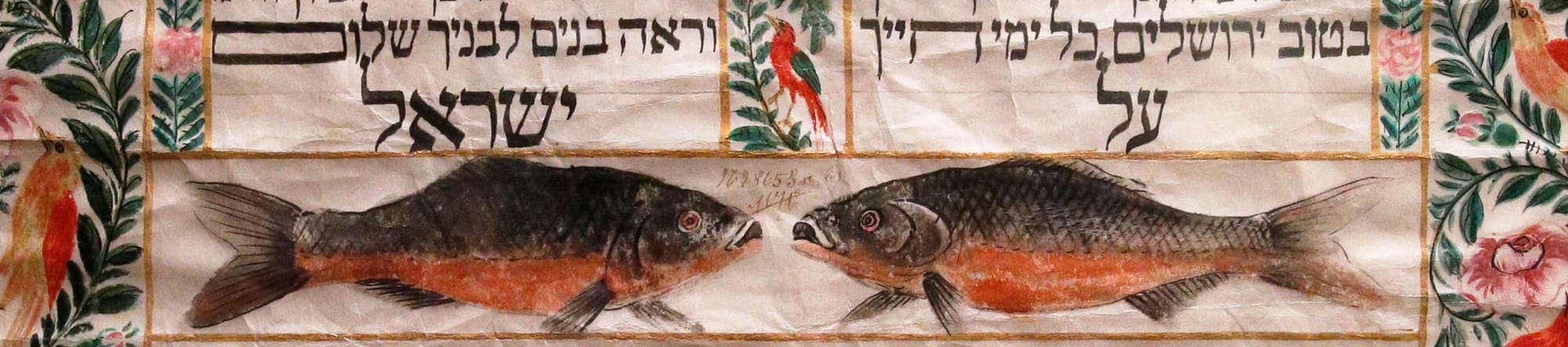
on celebrating tu bishvat north of the 39th parallel

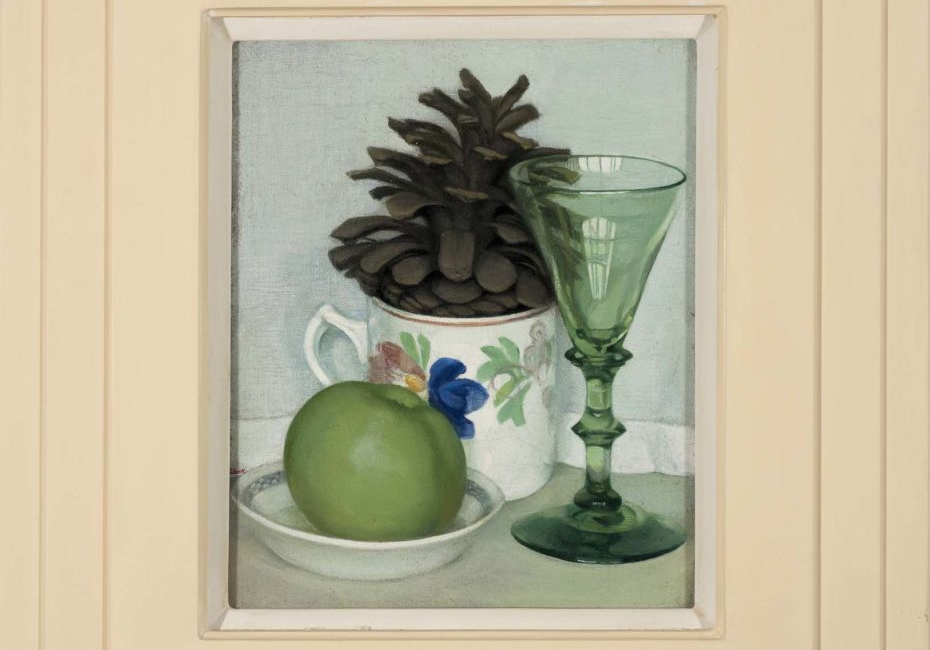
According to Sufism and Surrealism, the error of reason and logic lies in the fact that they concentrate on trivial things and claim that they have the answer to everything. Reason and logic treat existence as a problem that must have a solution, as the answer is deduced rationally and logically. Sufism and Surrealism, on the other hand, look on existence as something mysterious, and they are preoccupied with the question of how to become one with this mystery. The absence of answers here demonstrates a preoccupation with becoming one with existence. The presence of answers here demonstrates a preoccupation with exerting control over existence, i.e., it is separate; the first state denotes love and the second state supremacy.
Man is betrayed by his search for answers; they restrict him, i.e., they cut off his freedom. Answers separate man from himself, from his essence: man is a language – searching for the other, for the thing, not in order to make it submit to his knowledge of it, but rather to join with it, in equality and love. (...)
Reason limits, and therefore its answers limit. When we define something we negate it – in the sense that we enclose it in brackets – the definition – and negate what lies outside it. The definition is a negation, as Spinoza says. When you define G-d, you negate (G-d), because you make (G-d) equal to things that have been defined. Defining man or existence denies the essence of both of them. Man, like existence, is a free, potential and diverse reality, not a reality that is finite and fettered.
Adonis, Sufism and Surrealism, 1995 - translated from the Arabic by Judith Cumberbatch, 2005
❧ ❧ ❧
One of the things that makes Tu Bishvat exciting is that, almost more than any other Jewish holiday, it hasn't quite gelled yet. That is: its purpose, significance, ritual observance, place in Jewish life are still being contested.
There are a couple of reasons for this. First, Tu Bishvat's original purpose is land-based. It is one of the four agricultural New Years described in the Mishnah: 1 Nisan is the New Year for the reign of kings and the order of festivals; 1 Elul is the New Year for animal tithes; 1 Tishrei (which we know as Rosh Hashanah) is the New Year for the Jubilee cycle, for planting and for tithing vegetables; and in Shevat is the New Year for fruit trees. This date marker helps us to tithe properly, and to fulfill the commandment not to harvest fruit from trees that are too young.
These "tithes" (מַעְשַׂר) have several social functions. The main one is to provide food for the Levites, the landless priestly class; but there are also tithes for temple sacrifice and tithes for feeding the poor (מעשר עני). We have retained the concept of tithing in the form of Tzedakah (though we could all stand to take this mitzveh more seriously, as Rena Yehuda writes!) – but these particular tithing holidays are mostly lost. Or, lost isn't really the right term. I like Benay Lappe's metaphor of the tile contour gauge: each of the pieces of Jewish tradition remains present, like the pins of the tool; we pull out the pins we need to fit around the shape of our present moment. The pins we're not using don't go away, they're just not in play at the moment. ("Every card ever turned over remains in play / Get used to this.")

Unlike other seasonal holidays that were metaphorized / diasporized / rabbinicized earlier, the pin of Tu Bishvat wasn't pulled out again until the 16th century. Rabbi Isaac Luria and his followers, the Lurianic Kabbalists, created a mystical seder for Tu Bishvat, which uses sensory experience (fruits, wines) and natural metaphors to bring the participants through the realms of experience closer to a direct encounter with the divine.
The problem with mystical ceremony is that it's not for everyone. This is true on a couple of different levels. Traditionally, Kabbalistic study is literally not for everyone: only married men over the age of 40 are supposed to study the Kabbalah. Leaving aside the exclusion of women, which was historically no less true of other kinds of Torah study, there is wisdom to this kind of restriction. Mystical knowledge builds on Talmudic learning, which builds on the study of the Tanakh. It takes a long time to reach the level of learning where you can be conversant on all of these registers at once. If you try to approach mystical learning without a strong foundation in Torah ethics, you can easily spin out into bad mysticism, which is to say spiritual bypassing. (Witness, for example, the appropriation of Kabbalistic thought by witchy Christians from the medieval period to the present.) The danger isn't that you start doing evil magicks or whatever; the danger is that you approach mystical experience, attempts to directly encounter the magnificence of the divine, as fuel to feed your own ego rather than another way to serve G-d.
There's also another sense in which mysticism isn't "for everyone" – a lot of people just don't dig it. Not everyone in any religious tradition can be a mystic. If we think about religious practice as a social glue that helps families and communities cohere, then mystical ritual doesn't serve this function. Do you really want to try to have a transcendental experience sitting at the dinner table next to your uncle?
So the question becomes: how do we make this holiday accessible from many entry points? Think about Passover: the rich symbolism of that holiday means that you can have a very intense religious encounter with Hashem as the One who Liberates the Bound, Lifts Up the Lowly, and is Close to the Brokenhearted; you can have an intense secular-spiritual Seder in the Streets, making it into a protest holiday; and/or you can do a silly sing-along for kids where you throw toy frogs at each other. I don't know what Pesach Seders were like in the 16th century, but I bet that the Lurianic Kabbalists made Tu Bishvat into a seder for exactly this reason.
So how do we make Tu Bishvat as spiritually rich as Pesach? Many of us, over the course of the last century, have tried and failed. One reason for this failure is the spiritually bankrupt marriage of "environmentalism" and zionism. Here's how My Jewish Learning puts it:
In modern times, Tu Bishvat has become a symbol of both Zionist attachment to the land of Israel as well as an example of Jewish sensitivity to the environment. Early Zionist settlers to Israel began planting new trees not only to restore the ecology of ancient Israel, but as a symbol of renewed growth of the Jewish people returning to their ancestral homeland. While relatively few Jews continue to observe the kabbalistic Tu Bishvat seder, many American and European Jews observe Tu Bishvat by contributing money to the Jewish National Fund, an organization devoted to reforesting Israel.
For environmentalists, Tu Bishvat is an ancient and authentic Jewish “Earth Day” that educates Jews about the Jewish tradition’s advocacy of responsible stewardship of God’s creation as manifested in ecological activism. Among them, contemporary versions of the Tu Bishvat seder, emphasizing environmentalist concerns, are gaining popularity.
I can't speak to the Israeli experience, but this is how most American Jews encounter Tu Bishvat: as a goofy holiday for kids. You make drawings of trees in Hebrew school, you talk about recycling, and you put money in a box to "plant a tree in Israel." As has been well-documented, the gruesome "reforestation" projects funded by these donations involve planting invasive, European trees to cover destroyed Palestinian villages and/or push Palestinians off of their land.
But Tu Bishvat is hardly the only Jewish holiday poisoned by Zionist violence. As Arielle Angel wrote in June 2025, "Over the past 20 months, there is no sacred Jewish ritual that has not been performed by Israeli soldiers in Gaza, in the ruins of someone’s home or school, right before or after a slaughter." I think the problem with Tu Bishvat is actually not the Zionist interpretation, but the fact that there isn't a strong/popular enough spiritual tradition (yet!) to counter-balance this interpretation. In other words, the problem is environmentalism.
What the hell is environmentalism? In his book Slow Violence and the Environmentalism of the Poor, Rob Nixon quotes his colleague Edward Said as calling it “the indulgence of spoiled tree huggers who lack a proper cause.” In her 2016 Edward Said Memorial lecture, Naomi Klein unpacks this dismissal, and uses it to put forth a vision of intersectional climate justice. Klein writes of a movement whose principles "don’t ask suffering people to shelve their concerns about war, poverty, and systemic racism and first ‘save the world,‘ but that instead demonstrate how all these crises are interconnected, and how the solutions could be, too."
This is a good direction for politics, but it isn't much help for religion. We can and should talk about contemporary environmental justice concerns at our Tu Bishvat seders, but doing so doesn't give us the spiritual grounding we need. As Emily Filler writes in "The Case for the Traditional [Passover] Haggadah:"
[T]he distance between the traditional haggadah’s world and our own is not a problem but a gift. In the absence of a fixed political script, we have the opportunity to be surprised anew by the ancient text and rituals, by one another’s insights and humor, by moments of connection between past generations and our own. In this light, contemporary leftist haggadot are, perhaps, attempting a shortcut: By committing a particular set of issues and phrases to the page, we avoid the more spontaneous, creative, and sometimes vulnerable act of generating commentary amongst ourselves. In offering us an opportunity for more open conversation, the traditional haggadah invites us to expand our political imaginations beyond what’s given to us on the page.
Over-interpretation cheapens our spiritual inheritance. There’s nothing worse than a ritual that’s been exigesized to death. The olives represent the olive trees burned by settlers in the West Bank; the pomegranates represent Convivencia; the almonds represent the drought crisis. This is a theology of guilt-tripping; it’s the environmentalism of the rich. Look at this beautiful feast, and think about the fact that our world is engulfed by war and extraction. But it’s also so, so unsatisfying to put a “positive spin” on mass extinction. As Robin Wall-Kimmerer says, ‘What’s one thing I can do to make a difference?’ is the wrong question.
The problem with environmentalism, spiritually speaking, is that it assumes there is something called ‘the environment’ or ‘nature’ that is separate from us as humans and that it’s our job to ‘protect.’ It’s a politics of allyship with the more-than-human. As in the politics of white allyship, the breakdown of life systems becomes someone else’s problem that we should care about because we’re good, empathetic people; rather than a threat to all life, including our own.
Spiritual environmentalism begins from a position of alienation (I eat wheat every day but have never harvested it; the fact that the soil is being depleted by over-harvesting is an abstract problem to me) and tries to bring the subject closer to ‘nature’ (I am meditating in a wheat field). This is a fraught process, for similar reasons to mysticism. It feels good to stand in a field of wheat, but if I’m only doing so to try to ‘feel something,’ I’m at risk of instrumentalizing the ecosystem to feed my own ego. Also, like, you don't experience soil depletion by standing in a wheat field for one day, you experience it by living with the wheat field every day for your whole life.
Edward Said knew this problem firsthand, describing himself as “an extreme case of an urban Palestinian whose relationship to the land is basically metaphorical.” Taking our cue from him, I want to suggest that we don’t need to disalienate ourselves from the land in order to care about it. Indeed, attempts to do so—to go ‘back to the land’—are part of how we got into the mess of zionism in the first place. Witness, for example, this account from an early zionist settler:
The world of nature, which till then had been a dead and silent thing to me, opened and became alive and took me in. Neither the house nor the tent was my home, but the wild field and the stony hill. I found company in the flowers and rocks, in the trees and birds....I began to feel the life every plant and tree. Oh darling brother Dov, it’s a marvelous thing to feel oneself poured into nature, part of that firm harmony. It’s good to live with the sun and moon, with the trees and flowers.
(Letter of Rahel Zisle-Levkovich, in The Plough Woman: Records of the Pioneer Women of Palestine)
This is what I mean by settler romanticism. You can’t reinvent indigeneity from scratch, just like you can’t become a mystic in a two-day workshop. Indigenous relationships with land take thousands of years to cultivate, and we don’t have that kind of time. Even the great Martin Buber, mystical scientist of the self-other relationship, falls into racist paternalism when he attempts this kind of spiritual overleap:
The Jewish farmers have begun to teach their brothers, the Arab farmers, to cultivate the land more intensively; we desire to teach them further: together with them we want to cultivate the land —to 'serve it,' as the Hebrew has it. The more fertile this soil becomes, the more space there will be for us and for them. We have no desire to dispossess them: we want to live with them.
(Martin Buber, An Open Letter to Mahatma Gandhi, 1939)*
One feels like the angel of history looking back at these texts. What a catastrophe!
If we can't strive to 'become indigenous' in one generation–indeed, if we are committed to a diasporist ethic that means we may never become indigenous–how should we be relating to the land that feeds us?
Let's return to the question of mysticism. I have a hunch that leaning into the mystical nature of this holiday can be a way out of the morass.
As I was talking about Tu B'Shevat with my partner, who practices Buddhism, he said: "There's a reason that the Buddha found enlightenment sitting under a tree!" This made me think about the relationship of mystics to ha'am, the people. After he attained enlightenment, the Buddha did not spend the rest of his life in mystical contemplation of the divine: he went out taught people about the nature of suffering. Similarly, the Kabbalists contributed much to the shape of contemporary Judaism, including many parts of our daily liturgy. Even if not everyone can become a mystic, everyone can learn from mystics. Although the objects of their contemplation are indescribable, they can bring back pearls of wisdom to teach us– if we are willing to listen.
Considered in this light, the Tu B'Shevat seder is a ritual technology which aims to make the fruits of mystical contemplation accessible to all Jews. But we have to respect that it is a mystical contemplation, not a rational one. We have to approach it very differently from the analytic frame of mind with which we approach Torah study.
Let's return to the Sufism and Surrealism text I introduced at the beginning. What does Adonis say about the difference between the mystical and rational approaches?
- "Reason and logic treat existence as a problem that has a solution."
- The absence of answers = seeking becoming one with existence
- The search for answers = seeking mastery of existence
- We should be searching for the Other, not answers; not to gain mastery, but to join with the Other in equality and love
- Defining anything limits and therefore negates it; "when you define G-d, you negate G-d"
This rejection of mastery could be the point which links mysticism with a decolonial environmental justice ethic. (Again, being careful not to make decolonization a metaphor!) Our teacher Heschel writes:
What do we see when we see the world? There are three aspects of nature that command our attention: its power, its beauty, and its grandeur. Accordingly, there are three ways in which we may relate ourselves to the world–we may exploit it, we may enjoy it, we may accept it in awe. (...) The Greeks learned in order to comprehend. The Hebrews learned in order to revere. The modern man learns in order to use. To Bacon we owe the formulation, 'Knowledge is power.' This is how people are urged to study: knowledge means success. We do not know any more how to justify any value except in terms of expediency. (...) We have not only forfeited faith; we have lost our faith in the meaning of faith. All we have is a sense of horror. We are afraid of man. We are terrified at our own power. (...) If the world is only power to us and we are all absorbed in a gold rush, then the only god we may come upon is the golden calf. Nature as a tool box is a world that does not point beyond itself. It is when nature is sensed as mystery and grandeur that it calls upon us to look beyond it. The awareness of grandeur and the sublime is all but gone from the modern mind.
Abraham Joshua Heschel, G-d in Search of Man, 1955, 33-36
Here at last is a direction. We approach the trees not to use them, nor to enjoy them, but to be in awe of them. It is good to accept the limits of our own understanding. That is: both the limits of human understanding in general, and the limits of our own particular understanding as people with a variety of different relationships to our ecosystems. At the same time, it is good to seek knowledge of our corner of the world. It's good to learn the names of the trees on your block. But it's important to balance this knowledge-seeking with humility and reverence. This means not only reverence for the infinite complexity of the web of life, but reverence for people who know more about it than we do: namely, keepers of Local and Indigenous Knowledge Systems.
Here's a further twist, though: in my ecosystem, Tu B'Shevat comes in the dead of winter, at the time of year when I am least inclined to be in awe of other living beings. It's typically hard or impossible to hold a Tu B'Shevat seder outdoors, among actual trees.
So, how do we put this approach (reverence, humility, awe) into practice?
One way, I think, is through serious contemplation of beauty. See, for example, Thich Nhat Hanh's tangerine meditation:
When you wake up in the morning, everything sounds alive – the trees, the wind, the stars, the moon. And around us so many things are like that – very alive, very beautiful, very refreshing and healing. And if you are truly there, and then you’ll notice their presence. Because when we are real, when we become real, thanks to the practice of mindful breathing, mindful walking, become real. And when we are real and true, something else is also true and real, and that is why when you pick up your tea and hold it like this, because you are real the tea becomes real also. If you are not there, if you are lost in your thinking, your worries, the tea does not really exist. [...] [W]hen I pick up a tangerine with mindfulness, I come in touch with a miracle. A tangerine, please, try. A tangerine is nothing less than a miracle. If you are truly there, and you look, the tangerine is a miracle. And if you are truly focusing on the tangerine, we see it is a wonder, it is a miracle.
The Tu B'Shevat seder gives us many opportunities for this kind of encounter. At minimum, we get to eat four different kinds of fruit and drink four cups of wine or juice. Even for those of us who don't have the spiritual rigor to, as Nhat Hanh suggests, spend an hour eating an orange, slowing down and appreciating the splendor of these fruits can help us to cultivate awe.
We don't need to be in the midst of spring, looking at "the lilac-bush tall-growing with heart-shaped leaves of rich green, / With many a pointed blossom rising delicate, with the perfume strong I love, / With every leaf a miracle" to recognize that we are being kept alive by innumerable plants, animals, and microorganisms--and that these living beings are beautiful, complex and worthy of awe. And we don't need to treat our recognition of that fact as a political instrument toward something else. It's worth thinking about all by itself.
What I'm getting at is that we can give ourselves permission for Tu B'Shevat to be a joyful holiday and a religious holiday. If our relationship to the web of life is anxious and guilty, we will never get anything done. If our relationship to the web of life is one of inauthentically cultivated 'oneness,' we will never get anything done. As Jamila Bradley very helpfully writes in her recent essay "Joy Is a Strategy: The White Leftist Struggle with Spirit," "[t]hese [rituals, celebrations] aren’t side notes to “real” political action. These are the political action."
If we only think about trees in terms of human destruction of them, or in terms of their ability to purify our spirits, we are engaging in a kind of idolatry, a self-centered hubris. The truth is that plant life is older and more resilient than human life, and might well outlast us. We already completely depend on plants for our survival. The trick is not getting back to the land. The trick is realizing that we are already on it.
❧ ❧ ❧
As a coda, I want to say that I am not as versed as I should be in the work of Rabbi Arthur Waskow, of blessed memory, who did more than any other contemporary Jewish thinker to build out a rigorous framework for Tu B'Shevat. So, I want to set an intention that by next Tu B'Shevat, I will have read enough of R. Waskow's writing that I can reflect on this holiday by engaging his work.
❧ ❧ ❧
*Shout-out to the 2013 International Jewish Antizionist Network Tu B'Shevat Haggadah, which introduced me to the Buber and Zisle-Levkovich texts.