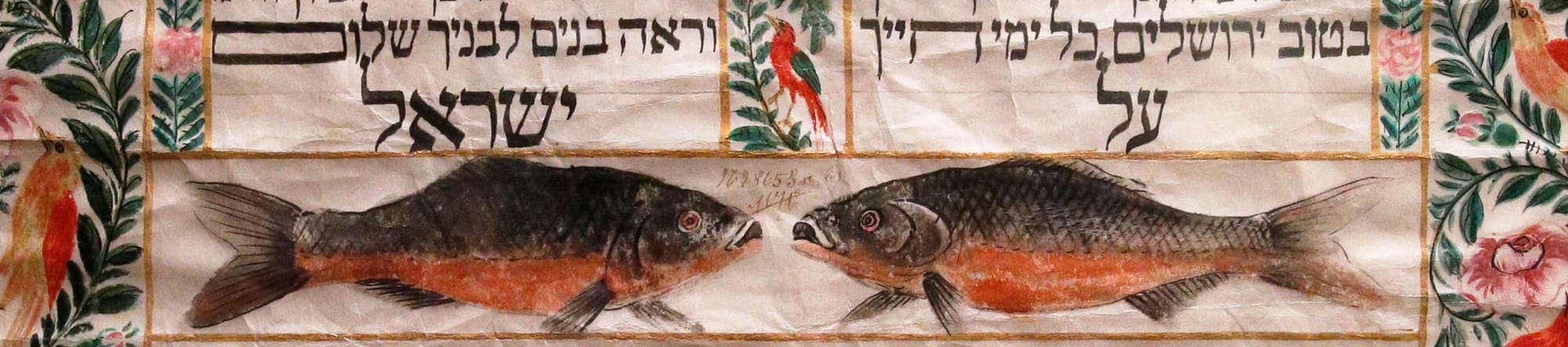
all is in the hands of heaven except the fear of heaven

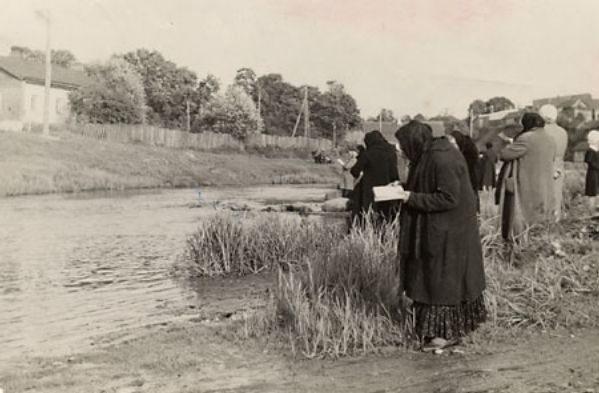
And Rabbi Ḥanina said: Everything is in the hands of Heaven, except for fear of Heaven. Man has free will to serve G-d or not, as it is stated: “And now Israel, what does the Lord your G-d ask of you other than to fear the Lord your G-d, to walk in all of (G-d's) ways, to love (G-d) and to serve the Lord your (G-d) with all your heart and with all your soul.” (Devarim 10:12).
Berokhos 33b:23-25
I am embarking here on a writing project whose conclusion is decided beforehand. I know the answer to the question: How can we as Jews be helpful in saving the world from climate collapse? The answer is: by throwing ourselves into global justice movements for decarbonization, land restoration, indigenous sovereignty, and against borders, empire, capital, and militarism. That’s not the real question. The real question is: What spiritual resources are available to us that will make it feel possible to dedicate our lives to these movements?
We all know that simply understanding the science of climate collapse does not motivate people to action: indeed, it often has the opposite effect, plunging us into a cycle of despair, avoidance, and denial. It helps to have a analysis that leads us to understand the political causes of climate change (capitalist extraction, colonialism, and war) and what is necessary to overcome it (popular global internationalist movements against the same)—but even this analytic understanding is not sufficient for action.
As the great Potawatomi scientist Robin Wall-Kimmerer puts it, How can we save the planet if we don’t love it? And how can we love the world if we don’t pick berries? That is to say: in order to commit ourselves to climate justice, we must be motivated by positive sentiments (what we stand for) rather than merely negative ones (what we stand against). And by positive sentiments, I mean love. Love not as a feeling but as a relationship. We love the blackberry bush because it feeds us, and it loves us back (feeds us) because we tend it. (bell hooks: "When we understand love as the will to nurture our own and another's spiritual growth, it becomes clear that we cannot claim to love if we are hurtful and abusive.")
People are motivated to action by love: that is, by their ongoing commitment to a mutually sustaining relationship. All of us are sustained and fed by the earth, whether we are consciously aware of it or not; but this bare fact is not enough to create a feeling of love. You might be aware that the worker who makes the breakfast sandwich you buy every morning is feeding and sustaining you, but would you instinctively step into traffic to save her if she were in danger? Clearly dependence is not sufficient to create a love relationship, a relationship with real personal stakes.
The fact that people are motivated to climate action by love is demonstrated by two facts: the localism of land defense projects, and the central role that indigenous people play in land defense. First: the most effective campaigns against extractive capitalism play themselves out on a local scale: communities fighting against polluting factories that poison their neighborhoods or their farmland; communities fighting the construction of data centers that steal their water; farmers planting mangroves to protect their communities from flooding. Choosing to fight is natural and easy when you are fighting for a place and people that you love. This brings me to the second point: 80% of all global biodiversity is stewarded by indigenous communities, who make up only 10% of humans on earth. Indigenous communities have ancient, reciprocal love relationships with land, water, and more-than-human life, which makes it natural and intuitive, if not easy, for them to commit themselves to land defense.
As I will argue throughout this series, Jews do not have such a relationship to any piece of land. We are in the 90% of humanity who must find our own path toward a committed love-relationship with the world we live in. My contention is that, while we do not have an unbroken reciprocal relationship with any particular piece of land, we do have an inherited tradition that was developed by our ancestors over thousands of years to teach us how to have good relationships with our communities, neighbors, and the lands on which we dwell. We have a homeland in the text.
In order to learn from this tradition, we have to take it seriously on its own terms. None of our politics—on the left or right—are the result of logical deductions from Torah, separable from our experiences of the secular world. We all have Svara (common sense, moral intuition, street wisdom) that informs our Torah. But if we take seriously that the wisdom of our ancestors can guide us out of the morass of settler-capitalist ideology with its world-annihilating implications, then we have to trust that we are not smarter than the generations before us, and that none of us has the whole picture. This acceptance of the limits of our knowledge is one way to define religious belief.
I suspect that, by reconnecting to the values that sustained our ancestors in diaspora, we can help to build a path that will help not only our people but also others in the non-indigenous 90% foster healthy relationships with the lands on which we all dwell. This could be what it means to be a light unto the nations. (Or, if that phrase creeps us out, we could say that this is what it means to bring Torah to the world.[1])
This is a large claim, especially since, thanks to the American-Zionist twin project, the majority of the Jewish people is currently committed to ecocidal and genocidal imperialism. But Zionism, like the global capitalist-imperialist system that sustains it, has both a beginning and and end date. There were Jews long before both Zionism and the United States, and there will be Jews long after Zionism and the United States.
Under the present political circumstances, the main way that we as Jews can be most helpful to global justice movements is by defending Palestinians and contesting the Zionist consensus in words and actions. We must continue to put our energy into this project, and we must do our best to win more of our community to its righteous call. But, in my experience, antizionism alone is not enough to build community around; it is a negative value. As Shaul Magid, Arielle Angel, R. Alissa Wise and others have argued, we are on the cusp of the Jewish future, and we badly need to be thinking through its terms.
Rabbi Brent Spodek makes a helpful analogy to this historical moment: there was a period of 150 years between the destruction of the second temple and the first redaction of the Mishnah—in other words, it took 150 years to develop the first iteration of Rabbinic Judaism after the fall of Temple Judaism. If we think of the 20th century destruction of diasporic Jewry by Nazism and other nationalisms as a calamity equivalent to the fall of the Second Temple, then we are halfway through this 150 year period in which we invent what Judaism is going to be next.
In times like these, thinking about the Judaism of the future is a radical act of optimism—or, I would prefer to say, a radical act of faith. In order to imagine the Judaism of 2100, we have to imagine the habitable world of 2100. In order to imagine the habitable world of 2100, we have to imagine not only the end of capitalist extraction and imperialist plunder, but also the widespread restoration of biodiversity. In other words, in order to imagine the Judaism of 2100, we have to imagine degrowth.
(There is an argument to be made that we don’t have to imagine a habitable world to imagine the Judaism of 2100; that, even in a scenario where most of the land on which humans currently dwell is uninhabitable; the land that is inhabitable is constantly buffeted by destructive storms; food is scarce; fire is common; disease is rampant, etc—that even in this scenario, there will still be Jews. Baruch Hashem! I hope that there will continue to be Jews no matter what happens. But this is not the world to which Moshiach will arrive.)
In my next post, I'm going to write a little bit about Jewish alternatives to climate apocalypse thinking. The world is never unsaveable!
[1] On the Torah as a benefit to all humankind, and Jews' responsibility to bring Torah to all peoples:
- "and they encamped in the desert": The Torah was given openly, in a public place. For if it were given in Eretz Yisrael, they could say to the nations of the world: You have no portion in it. But it was given openly, in a public place, and all who want to take it may come and take it.
Mekhilta DeRabbi Yishmael, Tractate Bachodesh 1:18
and:
- Rabban Shimon ben Gamaliel used to say: on three things does the world stand: On justice, on truth and on peace, as it is said: “execute the judgment of truth and peace in your gates” (Zechariah 8:16)...Hillel and Shammai received the oral tradition from them. Hillel used to say: be of the disciples of Aaron, loving peace and pursuing peace, loving mankind and drawing them close to the Torah.
Pirkei Avot 1:12
Much thanks to Binya Koatz at Shel Maala for teaching me these two pieces of Torah.